
Who we are
Farmland for the decades ahead.
Frontier Asset Partners invests in farmland and natural resources.
It looks for land that is already producing, but below its potential, in three regions of large-scale farming, and works with local operators to make it more productive, with soil and water targets for every property.
Where Frontier looks for land
17.1° S · 56.6° W
South America
Frontier is active in Brazil, Argentina, Uruguay, Paraguay and Bolivia. From the Cerrado to the Pampas: grains, oilseeds, coffee and livestock.
South America in detail25.8° S · 134.3° E
Australia
Winter grains, cotton and livestock, with most of the output sold overseas. In the Murray–Darling Basin, water is traded separately from the land.
Australia in detail52.9° N · 100.6° W
North America
The United States and Canada, from the Corn Belt to the Canadian Prairies. A mature market, with public data on soils and land values.
North America in detail
How land is selected.
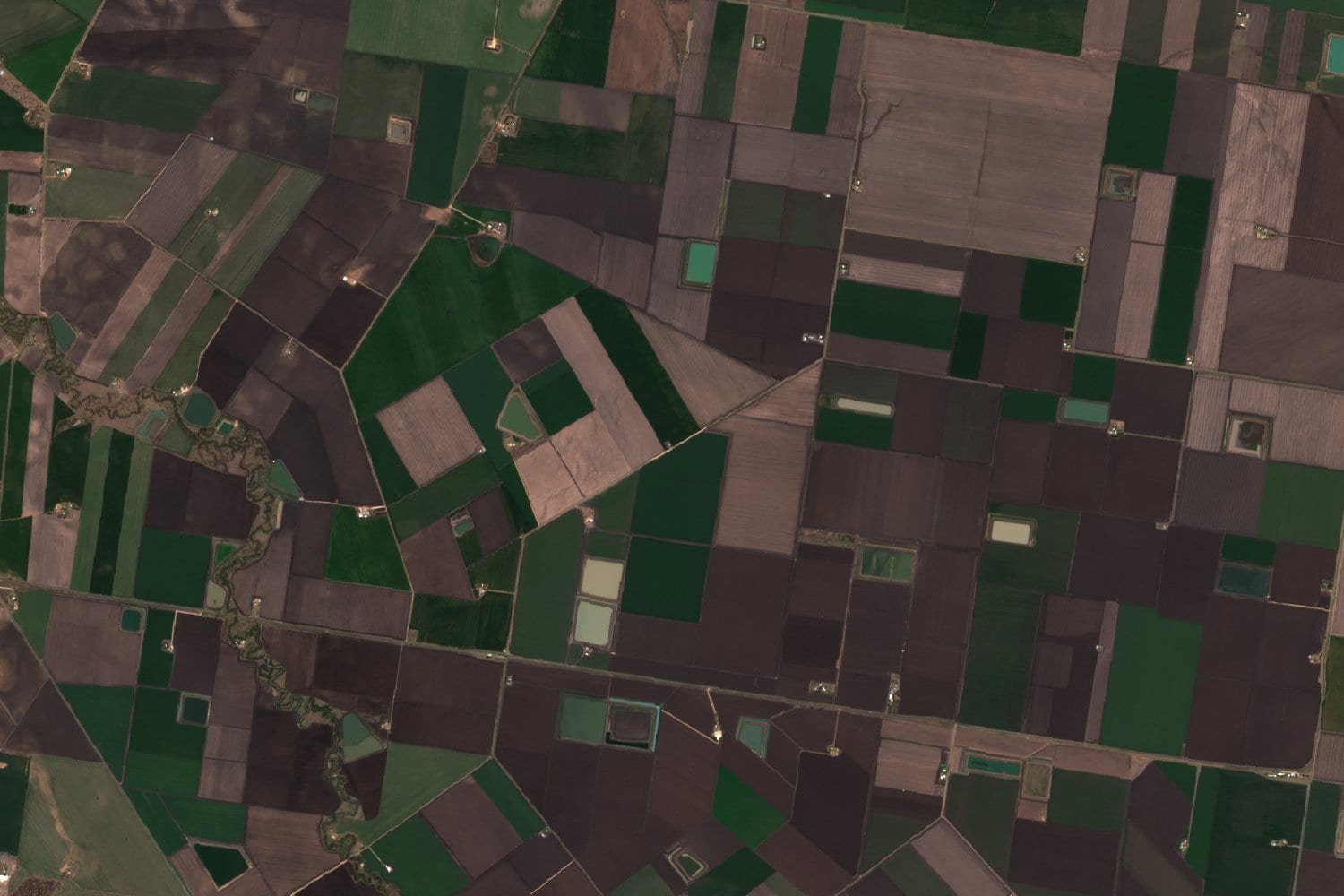
The search starts from afar, with public data and satellite imagery, runs through landowners, brokers and local operators, and ends on the property itself. Any assumption the field and the documents do not confirm stays out of the price.
From afar
- Satellite imagery of the area
- Official soil and land-capability surveys
- Long rainfall records, counting the dry years
- Agricultural climate-risk zoning, where it exists
- Distance and freight to storage, processors and ports
- Public records of land values and cash rents
In the field and in the documents
- Soil and land capability, tested on the property
- Water available in the basin, and water rights in good standing
- Title, chain of ownership and registration
- Environmental obligations met
- The area’s production history
- A local operator with a proven record through good years and bad
From entry to exit.
The structure of each investment is set before purchase. Operations and stewardship follow a horizon measured in decades, and the exit is part of the plan from the day of purchase.
At entry
Structuring
Outright purchase, sale-leaseback, a joint venture with the owner or a long-term lease, depending on the land, the country and what each side needs. Before closing, governance, each party’s incentives and the exit routes are agreed.
During the investmentHorizon measured in decades
Operations
Day-to-day farming stays with local operators, under a lease, a crop-share partnership or a contracted operation. Frontier sets the plan and the targets, tracks each season’s budget, production and costs, and goes into the field to check what the reports say.
Stewardship
Targets for soil, water, biodiversity and working conditions are built into each property’s plan from day one, because they determine how much the land can go on producing.
At exit
Realization
A sale, a recapitalization or a contract renewal, timed to the farming cycle and the market. More productive land, with clear documents and a clear stewardship record, draws more buyers, from institutional investors to agribusiness companies.
The productivity frontier.
Frontier takes its name from the frontier of sustainable productivity. It looks for land still producing below its potential and works to push that frontier forward: more output per hectare with less water and fewer inputs, and soil left more fertile.
The levers in detailThe value levers
Productivity
Built-up fertility, the right genetics, crop rotation and precision agriculture bring the land closer to its potential. It is the most direct lever.
Water and irrigation
Water security reduces dependence on rainfall, can make more than one crop a year possible and opens the way to higher-value crops, always within what the basin can sustain.
Infrastructure and storage
Storage, dryers, farm roads and power reduce losses and freight costs, and give the property the freedom to choose when to sell.
Higher-value land use, where sustainable
Degraded pasture turned into cropland, dryland brought under irrigation, an annual crop replaced by a perennial one. It goes ahead only when the change is agronomically sound, legally permitted and environmentally sustainable.
Who Frontier works with.
Investors, landowners and local operators. With those who invest or own land, the conversation starts in confidence.
Investors
Institutional investors and family offices.
What to expect
- Every assumption verified in the field and documented before any commitment.
- Structures and contracts that align everyone’s interests.
- Personal access to the investor portal, where documents and reports will be kept.
Landowners
Owners considering a sale, a lease or a partnership.
What to expect
- More than one way to do a deal: a sale, a sale-leaseback, a joint venture or a long-term lease.
- A confidential conversation, and the property assessed on the ground and in the documents.
- Governance and exit terms agreed before the deal closes.
Local operators
From the region, chosen for their record through good seasons and bad, their technical capability and their standing.
What to expect
- Targets and responsibilities set out in the contract.
- A plan and a budget for each season, with regular field visits from Frontier.
- A long-term partnership.
Principles in practice.
They apply to every property, in all three regions, from due diligence to exit.
The six stewardship principlesA long horizon
Harvests, price cycles and soil restoration play out over years. Each investment is planned on that timescale.
Discipline at entry
Deep due diligence and conservative assumptions. Overpaying is the hardest mistake to undo in a long-term investment.
Aligned interests
The contracts behind each investment are written so that investors, landowners, operators and Frontier all gain from the same outcome: land that produces more, season after season.
Soil, water and people
They are part of due diligence before purchase and keep their own targets for as long as the property is held.
Measure before claiming
Every stewardship indicator will be published with its measurement method. On carbon, nothing is claimed until it has been measured with a recognized method.
Frequently asked questions
Land, regions and risk
What kind of land does Frontier invest in?
Farmland already in production that yields less than it could: grains and oilseeds, sugarcane, coffee, livestock, and irrigated and permanent crops. Converting an area, such as degraded pasture to cropland, requires that the law allow it and that the change be environmentally sustainable.
Why these three regions?
Because they combine farming at scale, professional growers and established land markets, with different climates, crop calendars, currencies and water rules. Investing across all three spreads climate, price and currency risk.
The three regionsAre there restrictions on foreigners buying land?
Yes, and they vary from country to country: from notifying the government, in Australia, to an outright ban in the border security zone, in Bolivia. Every acquisition goes through local legal review, and the structure follows each country’s rules.
How are risks managed?
Climate, price and currency, legal and land-tenure issues and operations themselves are mapped in due diligence and monitored for as long as the investment lasts. All investments carry risk, including the loss of capital, and selling a property can take months or years.
The risks and how they are managedDeals and access
What is a sale-leaseback?
The owner sells the land and leases it back, so they can keep farming it. It is one of the ways Frontier does deals, alongside outright purchase, a joint venture with the owner and a long-term lease.
How does a landowner put forward a property?
By writing through the Contact page, in confidence. From there, the property is examined like any investment: soil and water in the field, production history, chain of title and environmental compliance.
How do investors follow their investment?
Through the investor portal, with personal access restricted to invited investors and partners. Documents, reports and communications will be posted there as they are published.
Investor portalCan I invest through this website?
No. No investment product is offered here. Any opportunity will be presented only through its own offering documents, to eligible investors and as permitted by the regulations of each jurisdiction.
Disclaimer